Kewtown’s sewer pipes get a R6m upgrade
24 October 2024
The City of Cape Town’s Water and Sanitation Directorate is accelerating its sewer and water pipe replacement efforts. More than 2 000 meters of sewer pipes between Cross Boulevard and Jan Smuts Drive in Kewtown, Athlone, are currently being rehabilitated. This proactive maintenance kicked off on 16 September 2024.
As part of the Mayor's Priority Programme (MPP), the Water and Sanitation Directorate has expanded its Pipe Replacement Programme, setting aside R323 million for infrastructure maintenance of both sewer and water pipes in the 2024/2025 financial year.
Among other areas, Kewtown will benefit from this investment with the rehabilitation of approximately 2 330 meters of sewer pipeline along key routes including: Jan Smuts Avenue, Springbok Street, Greinhout Street, Eland Street, Protea Street, Brandon Road, Dr Abdurahman Avenue, Poncho Street and Papaya Street. The work being undertaken focuses on replacing 150mm and 225mm diameter pipes.
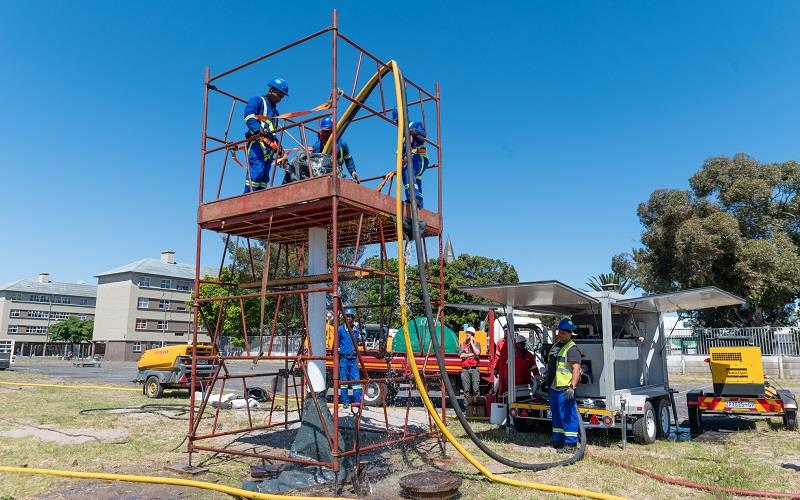
This project was initiated following multiple sewer pipe collapses in the area during the winters of 2022 and 2023. The collapses negatively impact drainage towards the Bokmakierie Sewer Pump Station, causing sewer overflows, which operational teams had to frequently attend to.
‘Pipeline rehabilitation forms part of the Water and Sanitation Directorate's strategy to reduce the number of sewer spills and to provide efficient sanitation services. The City aims to replace or rehabilitate about 1,5% of the city's total sewer network annually.
‘I’m pleased that the Kewtown sewer pipe replacement project is progressing well and on track to be concluded by March 2025 as scheduled,’ said the Mayoral Committee Member for Water and Sanitation, Councillor Zahid Badroodien.
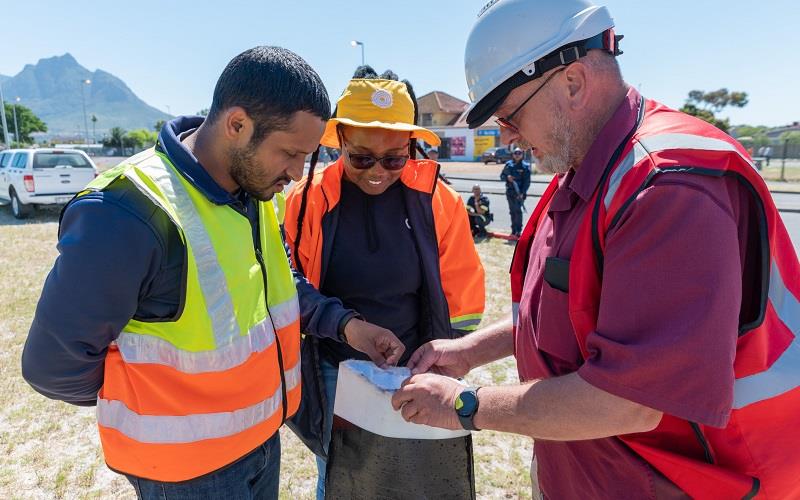
The trenchless rehabilitation method being used for this project is cured-in-place piping (CIPP). The near 35-year-old sewer pipe is relined with a textile tube coated in resin, which hardens after it has been inserted into an existing pipe. The process is jointless and seamless, proven to be one of the most effective and widely used for rehabilitation.
In addition to the CIPP, the scope of work also includes extensive cleaning of illegally dumped debris from the sewer system.
‘Residents are reminded that to preserve the improvements being made to the infrastructure in this area, we need their help. Waste needs to be disposed of more responsibly, to avoid damaging the new pipes,
‘Nothing other than human waste and toilet paper can flow through the system without eventually deteriorating the network.
‘Manhole covers also need to remain closed and intact, which will help to deter anti-social behaviour such as illegal dumping of construction rubble, blankets and kitchen oils. These foreign objects found blocking sewer lines, are often the root cause of overflows,’ said Councillor Badroodien.
What residents can do to help reduce sewer overflows:
• Don't flush anything other than human waste and toilet paper. Anything else will block the pipes. For more tips, see www.capetown.gov.za/blocked-sewers .
• Use the City's solid waste services provided to get rid of your waste, not drains.
• Report sewer blockages and overflows using one of the City's official channels so they can be cleared in a reasonable timeframe.
• Report vandalism to the sewage reticulation system and stolen or missing sewer manhole covers.
• Use the City's drop-off facilities to get rid of any solid waste. See the City's drop-offs for recyclables: https://bit.ly/3mhagVh
End
Published by:
City of Cape Town, Media Office